
Kräuterwissen
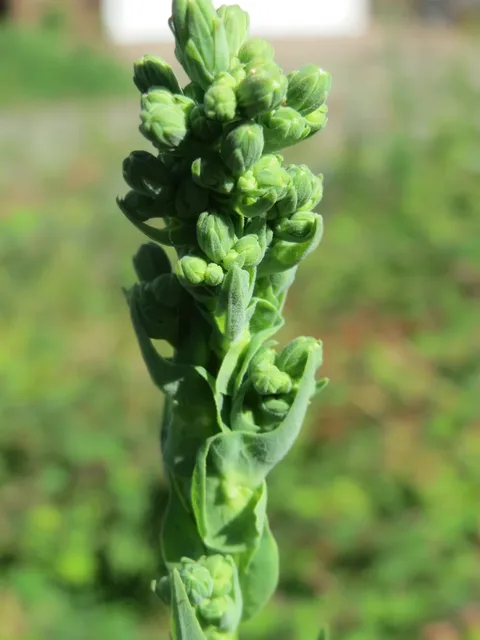
Gift-Lattich
Lactuca virosa
Plantae · Tracheophyta · Asteraceae · Lactuca · Asterales · Magnoliopsida
Auch: Opium lettuce, bitter lettuce
Wirkung
- Sedativ/Hypnotisch
- Antispasmodisch
- Analgetisch
- Anxiolytisch
- Anti-inflammatorisch
- Respiratorisch
Anwendung
- Tea/Decoction
- Tincture
- Capsules/Powder
- Fresh Juice
Überlieferte Heilwirkungen
- Schlafstörungen, Insomnie
- Trockener, krampfhafter Husten (post-viral)
- Leichte Schmerzen (z. B. dyspeptische Beschwerden)
- Leichte Angstzustände
- Mild arthritische Beschwerden
- Chronischer Husten (nicht produktiv)
Ayurveda
- Vata/pitta-balancing (cooling, unctuous)
- ja
Überliefertes Wissen
- Sedativ, Hustenmittel in europäischer Volksmedizin
- Vata/Pitta-balancing (cooling, unctuous) in Ayurveda
Wuchs
Tall annual herb
Blütezeit
- Midsummer bis early autumn
Herkunft
- Kontinente
- ['Europa', 'Asia']
- Laender
- ['DE', 'AT', 'CH', 'TR']
- Klimazonen
- ['gemäßigt']
Verwendete Pflanzenteile
- oberirdische Teile
Zubereitung
- 1:5 ratio (1 part herb to 5 parts alcohol), 40–60% alcohol
- 400–600 mg dried herb per capsule
- 1–2 tsp fresh juice
Erntezeit
- Teil: Blüte · Monate: [6, 7, 8]
- Teil: Blatt · Monate: [5, 6]
Sammeln
- Monate: [4, 5] · Hinweis: Vorzugsweise jung und zart sammeln · Bedingungen: trocken (kein Regen) · Pflanzenteil: Blatt · Reifezustand: vor Blüte|spät im Sommer nach Blüte
- Monate: [4, 5] · Hinweis: Milchsaft durch Anritzen der Stängel oder Abschaben der Blätter gewinnen (Handschuhe empfohlen) · Tageszeit: morgens · Bedingungen: keine spezifischen Bedingungen im Text · Pflanzenteil: Milchsaft · Reifezustand: vor Reife|Knospe
Inhaltsstoffe
- alkaloids
- sesquiterpene lactones
- flavonoids
- polyacetylenes
- mucilage
Ätherische Öle
- (3s,3as,9as,9bs)-3,6-dimethyl-9-({[(2r,3r,4s,5s,6r)-3,4,5-trihydroxy-6-(hydroxymethyl)oxan-2-yl]oxy}methyl)-3h,3ah,4h,5h,9ah,9bh-azuleno[4,5-b]furan-2,7-dione
- (3as,5r,6ar,8s,9ar,9bs)-5-hydroxy-3,6,9-trimethylidene-8-{[(2r,3r,4s,5s,6r)-3,4,5-trihydroxy-6-(hydroxymethyl)oxan-2-yl]oxy}-octahydroazuleno[4,5-b]furan-2-one
- 4-hydroxy-9-(hydroxymethyl)-3,6-dimethyl-3h,3ah,4h,5h,9ah,9bh-azuleno[4,5-b]furan-2,7-dione
- 9-(hydroxymethyl)-6-methyl-3-methylidene-3ah,4h,5h,9ah,9bh-azuleno[4,5-b]furan-2,7-dione
- (3as,4r,9ar,9bs)-4-hydroxy-9-(hydroxymethyl)-6-methyl-3-methylidene-3ah,4h,5h,9ah,9bh-azuleno[4,5-b]furan-2,7-dione
- lactucin
- 9-(hydroxymethyl)-3,6-dimethyl-3h,3ah,4h,5h,9ah,9bh-azuleno[4,5-b]furan-2,7-dione
- 3,6-dimethyl-9-({[3,4,5-trihydroxy-6-(hydroxymethyl)oxan-2-yl]oxy}methyl)-3h,3ah,4h,5h,9ah,9bh-azuleno[4,5-b]furan-2,7-dione
- 8-deoxylactucin
- (3s,3as,9s,11as)-3,10-dimethyl-2-oxo-9-{[(2r,3r,4s,5s,6r)-3,4,5-trihydroxy-6-(hydroxymethyl)oxan-2-yl]oxy}-3h,3ah,4h,5h,8h,9h,11ah-cyclodeca[b]furan-6-carbaldehyde
- 3-methyl-6,9-dimethylidene-8-{[3,4,5-trihydroxy-6-(hydroxymethyl)oxan-2-yl]oxy}-octahydro-3h-azuleno[4,5-b]furan-2-one
- (3s,3as,9r,11as)-3,10-dimethyl-2-oxo-9-{[(2r,3r,4s,5s,6r)-3,4,5-trihydroxy-6-(hydroxymethyl)oxan-2-yl]oxy}-3h,3ah,4h,5h,8h,9h,11ah-cyclodeca[b]furan-6-carbaldehyde
- (3s,3as,9as,9bs)-9-(hydroxymethyl)-3,6-dimethyl-3h,3ah,4h,5h,9ah,9bh-azuleno[4,5-b]furan-2,7-dione
- 3,10-dimethyl-2-oxo-9-{[3,4,5-trihydroxy-6-(hydroxymethyl)oxan-2-yl]oxy}-3h,3ah,4h,5h,8h,9h,11ah-cyclodeca[b]furan-6-carbaldehyde
Sicherheit und Wechselwirkungen
Giftigkeit
mittel
Herkunft der Einstufung: Lactucarium ('Giftlattich-Opium'): Lactucin und Lactucopikrin wirken sedierend und analgetisch. In höherer Dosis Benommenheit, Sehstörungen, Herzrasen; historisch als Opiumersatz verwendet. Der Artname benennt den Ruf, nicht eine Letalität.
Vergiftungszeichen
Übelkeit, Vomiting oder Dizziness bei hohen Dosen
Nebenwirkungen
- Übelkeit bei hohen Dosen
Gegenanzeigen
- Schwangerschaft, Stillzeit, Kindern <12 Jahre, Leber-/Nierenproblemen
Wechselwirkungen
- Theoretisch möglich mit Sedativa (z. B. Benzodiazepine)
- Typ: verstärkt · Hinweis: Verstärkt beruhigende und nervenstärkende Wirkung. · Pflanze latein: Scutellaria lateriflora · Pflanze deutsch: Hirse-Kraut (Skullcap)
- Typ: verstärkt · Hinweis: Potenziert sedative Effekte bei Schlafstörungen. · Pflanze latein: Valeriana officinalis · Pflanze deutsch: Waldmeister (Valerian)
- Typ: verstärkt · Hinweis: Unterstützt kognitive Funktion und Stressresistenz. · Pflanze latein: Bacopa monnieri · Pflanze deutsch: Gotu Kola (Brahmi)
- Typ: verstärkt · Hinweis: Kombiniert mit Wild Lettuce zur Beruhigung von Nervosität und Angst. · Pflanze latein: Withania somnifera · Pflanze deutsch: Winter-Squash (Ashwagandha)
- Typ: verstärkt · Hinweis: Synergie bei Stress und Schlafstörungen. · Pflanze latein: Ocimum sanctum · Pflanze deutsch: Tulsi (Heiliger Basilikum)
- Typ: verstärkt · Hinweis: Traditionelle Kombination in Ayurveda für nervöse Unruhe. · Pflanze latein: Nardostachys jatamansi · Pflanze deutsch: Jatamansi (Wohlriechendes Nard)
- Typ: NIE_kombinieren · Hinweis: Risiko verstärkter Sedierung (Atemdepression, Sturzgefahr). · Pflanze deutsch: Sedativa (Benzodiazepine, Barbiturate, Alkohol)
- Typ: NIE_kombinieren · Hinweis: Theoretisches Risiko von Serotonin-Syndrom (bei hohen Dosen). · Pflanze deutsch: MAO-Hemmer
- Typ: NIE_kombinieren · Hinweis: Additive sedative Wirkung. · Pflanze deutsch: Schlafmittel (z.B. Zolpidem, Zopiclon)
- Typ: NIE_kombinieren · Hinweis: Verstärkte Atemdepression möglich. · Pflanze deutsch: Opioide
- Typ: NIE_kombinieren · Hinweis: Theoretische Gerinnungsrisiken durch Flavonoide (unbestätigt). · Pflanze deutsch: Antikoagulanzien (z.B. Warfarin)
- Typ: wirkung_aufgehoben · Hinweis: Gegensätzliche Effekte (Wild Lettuce wirkt beruhigend, Stimulanzien anregend). · Pflanze deutsch: Stimulanzien (Koffein, Amphetamine, Nikotin)
- Typ: wirkung_aufgehoben · Hinweis: Mögliche Elektrolytstörungen durch erhöhten Flüssigkeitsverlust. · Pflanze deutsch: Diuretika (z.B. Furosemid)
Quellen
- Typ: wikipedia_de · Url: https://de.wikipedia.org/wiki/Gift-Lattich · Titel: Gift-Lattich
- Typ: wikipedia_en · Url: https://en.wikipedia.org/wiki/Lactuca_virosa · Titel: Lactuca virosa
- Typ: wikipedia_en · Url: https://en.wikipedia.org/wiki/Lactuca_virosa · Titel: Lactuca virosa
- Typ: pfaf · Url: https://pfaf.org/user/Plant.aspx?LatinName=Lactuca virosa · Titel: PFAF — Lactuca virosa
- Typ: lotus · Url: https://lotus.naturalproducts.net/search/simple/Lactuca%20virosa · Titel: LOTUS — Lactuca virosa
- Typ: web · Url: https://en.wikipedia.org/wiki/Lactuca_virosa · Titel: Lactucavirosa- Wikipedia
- Typ: web · Url: https://antropocene.it/en/2023/04/13/lactuca-virosa-2/ · Titel: Lactucavirosa: Systematics, Etymology, Habitat, Cultivation ..
- Typ: web · Url: https://www.inaturalist.org/taxa/53108-Lactuca-virosa · Titel: bitter lettuce (Lactucavirosa) · iNaturalist
- Typ: web · Url: https://de.wikipedia.org/wiki/Gift-Lattich · Titel: Gift-Lattich – Wikipedia
- Typ: web · Url: https://www.pflanzenfreunde.com/heilpflanzen/giftlattich.htm · Titel: Giftlattich - eine Heilpflanze der Volksmedizin Lactuca virosa
- Typ: web · Url: https://translate.google.com/translate?u=https://www.herbalreality.com/herb/wild-lettuce/&hl=ar&sl=en&tl=ar&client=srp · Titel: Wild Lettuce (Lactuca virosa): Benefits, Uses, Safety | Herbal Reality
- Typ: web · Url: https://en.wikipedia.org/wiki/Lactuca_virosa · Titel: Lactucavirosa- Wikipedia
- Typ: web · Url: https://ask-ayurveda.com/wiki/article/4794-lactuca-virosa · Titel: Lactucavirosa(Wild Lettuce) –AyurvedicUses, Traditional Benefits...
- Typ: web · Url: https://www.herbalreality.com/herb/wild-lettuce/ · Titel: Wild Lettuce (Lactucavirosa): Benefits, Uses, Safety | Herbal Reality
Dieser Eintrag wird noch ergänzt.
Als PDF mitnehmen