
Kleeulme
Ptelea trifoliata
Plantae · Tracheophyta · Rutaceae · Ptelea · Sapindales · Magnoliopsida
Auch: Hopfenbaum, Wilder Hopfen
Über die Pflanze
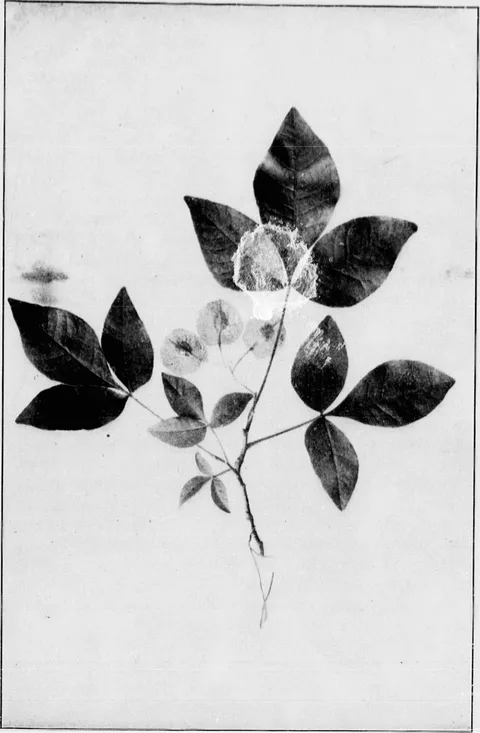
Ein kleiner Baum oder mehrstämmiger Strauch mit breiter Krone. Die Borke ist rötlich-braun bis graubraun und hat kurze horizontalen Lenticellen. Blätter sind dreiteilig, eiförmig bis länglich (3–12 cm lang), dunkelgrün auf der Oberseite und heller auf der Unterseite mit Herbstfärbung in rustig-gelb. Die Blüten sind klein, weiß bis grünlich-weiß (1–2 cm Durchmesser) und blühen von Mai bis Juni. Früchte sind scheibenförmige, papprige Samara (2–2,5 cm Durchmesser).
Wirkung
antibakterielle, antioxidative und entzündungshemmende Eigenschaften
Anwendung
Zierpflanze, Hoppen-Ersatz beim Bierbrauen, Gewürz in der Küche
Überlieferte Heilwirkungen
- bei Fieber, Malaria (Quinin-ähnliche Wirkung), als Abführmittel oder bei Verdauungsbeschwerden, äußerlich bei Hauterkrankungen
Erkennungsmerkmale
kleine Punkte (Öldrüsen) auf den Blattflächen; rötlich-braune Borke mit kurzen horizontalen Lenticellen; scheibenförmige, papprige Früchte
Wuchs
kleiner Baum oder mehrstämmiger Strauch
Blütezeit
- Mai–Juni
Standort
Felsige Wälder, feuchte bis trockene Böden (oft auf Kalk- oder mafischen Substraten), Wälder, Savannen, Prärien, Gläser, Sanddünen
Herkunft
Nordamerika
Verwendete Pflanzenteile
- Blätter und Rinde als Gewürz oder Tee, Früchte als Hoppen-Ersatz beim Bierbrauen
Erntezeit
- Teil: Blüte · Monate: [5, 6] · Hinweis: ...
Sammeln
Sammelzeit: Spätsommer | Pflanzenteile: Fruchtzapfen bzw. Ähren
Inhaltsstoffe
- kokusaginine
- methyl (2r)-4-{6-methoxy-9-methyl-8-oxo-2h-[1,3]dioxolo[4,5-h]quinolin-7-yl}-2-methylbutanoate
- 3-(2-hydroxy-3-methylbut-3-en-1-yl)-4,6,8-trimethoxy-1-methylquinolin-2-one
- (2r,9r)-6,8-dimethoxy-9-(methylamino)-2-(prop-1-en-2-yl)-1h,2h,3h,9h-cyclopenta[b]naphthalen-4-one
- 6-methoxy-7-(3-methylbut-2-en-1-yl)-2h-[1,3]dioxolo[4,5-h]quinolin-8-ol
- 3,4-bis[(3,4-dimethoxyphenyl)methyl]oxolan-2-one
- 4,8-dimethoxy-5-methyl-7-(3-methylbut-2-en-1-yl)-2h-[1,3]dioxolo[4,5-g]quinolin-6-one
- 2-undecyl-1h-quinolin-4-one
- 7-(3-hydroxy-3-methyl-2-oxobutyl)-6-methoxy-9-methyl-2h-[1,3]dioxolo[4,5-h]quinolin-8-one
- 3-[(2r)-2-hydroxy-3-methylbut-3-en-1-yl]-4,6,8-trimethoxy-1-methylquinolin-2-one
- methyl 4-{6-methoxy-9-methyl-8-oxo-2h-[1,3]dioxolo[4,5-h]quinolin-7-yl}-2-methylbutanoate
- 6,8-dimethoxy-9-(methylamino)-2-(prop-1-en-2-yl)-1h,2h,3h,9h-cyclopenta[b]naphthalen-4-one
- 7-(2-hydroxy-3-methylbut-3-en-1-yl)-6-methoxy-9-methyl-2h-[1,3]dioxolo[4,5-h]quinolin-8-one
- maculosidine
- 6-methoxy-7-[(2s)-2-methoxy-3-methylbut-3-en-1-yl]-9-methyl-2h-[1,3]dioxolo[4,5-h]quinolin-8-one
- 7-[(2r)-2-hydroxy-3-methylbut-3-en-1-yl]-6-methoxy-9-methyl-2h-[1,3]dioxolo[4,5-h]quinolin-8-one
- 4,6,8-trimethoxy-3-(2-methoxy-3-methylbut-3-en-1-yl)-1-methylquinolin-2-one
- 4,6,8-trimethoxy-1-methyl-3-(3-methylbut-2-en-1-yl)quinolin-2-one
- arctigenin methyl ether
- 6-methoxy-7-(2-methoxy-3-methylbut-3-en-1-yl)-9-methyl-2h-[1,3]dioxolo[4,5-h]quinolin-8-one
- 4,6,8-trimethoxy-3-[(2s)-2-methoxy-3-methylbut-3-en-1-yl]-1-methylquinolin-2-one
Sicherheit und Wechselwirkungen
Giftigkeit
schwach
Herkunft der Einstufung: Kleeulme: Furanocumarine und Alkaloide (die Zeile nennt Kokusaginin) — phototoxisch bei Hautkontakt.
Nebenwirkungen
bei empfindlichen Personen können Hautreizungen oder allergische Reaktionen auftreten
Gegenanzeigen
Einnahme während der Schwangerschaft oder Stillzeit sollte vermieden werden, da die Sicherheit nicht ausreichend erforscht ist.
Wechselwirkungen
Zu Wechselwirkungen liegen uns hier keine Angaben vor. Das heißt nicht, dass es keine gibt. Wenn du Medikamente nimmst, frag bitte deine Ärztin oder in der Apotheke nach.
Quellen
- Typ: wikipedia_de · Url: https://de.wikipedia.org/wiki/Kleeulme · Titel: Kleeulme
- Typ: wikipedia_de · Url: https://de.wikipedia.org/wiki/Kleeulmen · Titel: Kleeulmen
- Typ: wikipedia_en · Url: https://en.wikipedia.org/wiki/Ptelea_trifoliata · Titel: Ptelea trifoliata
- Typ: wikipedia_en · Url: https://en.wikipedia.org/wiki/Ptelea_trifoliata · Titel: Ptelea trifoliata
- Typ: pfaf · Url: https://pfaf.org/user/Plant.aspx?LatinName=Ptelea trifoliata · Titel: PFAF — Ptelea trifoliata
- Typ: lotus · Url: https://lotus.naturalproducts.net/search/simple/Ptelea%20trifoliata · Titel: LOTUS — Ptelea trifoliata
- Typ: web · Url: https://link.springer.com/article/10.1007/BF02907947 · Titel: Historical review of ptelea trifoliata in botanical and medical literature1 | Ethnobotany and Economic Botany | Springer Nature Link
- Typ: web · Url: https://simplyliving.org/ecology/august-2022-tree-of-the-month-common-hopwood-wafer-ash-ptelea-trifoliata-by-martin-mort-schmidt-for-simply-living/ · Titel: August 2022 Tree of the Month – Common Hopwood, Wafer Ash Ptelea Trifoliata By Martin (Mort) Schmidt for Simply Living - Simply Living
- Typ: web · Url: https://www.planetayurveda.com/library/uses-and-benefits-of-ptelea-trifoliata/ · Titel: What are the Uses and Benefits of Ptelea Trifoliata (Hoptree)?
- Typ: web · Url: https://en.wikipedia.org/wiki/Ptelea_trifoliata · Titel: Pteleatrifoliata- Wikipedia
- Typ: web · Url: https://plants.ces.ncsu.edu/plants/ptelea-trifoliata/ · Titel: Pteleatrifoliata(Hoptree, Hop-tree, Stinking Ash, Wafer-ash)
- Typ: web · Url: https://pfaf.org/USER/Plant.aspx?LatinName=Ptelea+trifoliata · Titel: PteleatrifoliataHop Tree, Common hoptree, Pallid hoptree PFAF...
- Typ: web · Url: https://www.planetayurveda.com/library/uses-and-benefits-of-ptelea-trifoliata/ · Titel: What are the Uses and Benefits of Ptelea Trifoliata (Hoptree)?
- Typ: web · Url: https://link.springer.com/article/10.1007/BF02907947 · Titel: Historical review of ptelea trifoliata in botanical and medical literature1 | Ethnobotany and Economic Botany | Springer Nature Link
- Typ: web · Url: http://www.naturalmedicinalherbs.net/herbs/p/ptelea-trifoliata=hop-tree.php · Titel: medicinal herbs: HOP TREE - Ptelea trifoliata