
Kräuterwissen
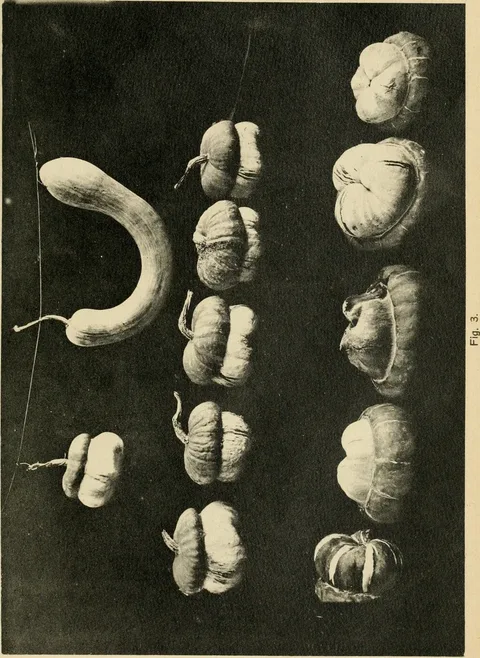
Cucurbita Pepo
Cucurbita pepo
Plantae · Tracheophyta · Cucurbitaceae · Cucurbita · Cucurbitales · Magnoliopsida
Auch: Cucurbita fraterna, Cucurbita texana, Cucurbita ovifera
Wirkung
- Antibakteriell
- antioxidativ
- antitumoraktiv
- hypoglykemisch (anti-diabetisch)
- hypolipidemisch
Anwendung
- Umschlag aus Samen und Blüten bei Kratzwunden von Kakteen
Überlieferte Heilwirkungen
- Fieber
- Husten
- Urinfrequenz
- Anti-scorbutic
- Hyperplasie
- Rheumatismus
- Blutungen
- Schwangerschaftsabbruch
- Prostatakrebs
- Verstopfung
- Blinzeln
Überliefertes Wissen
- Verwendung in phallischen Tänzen, symbolisierend Fruchtbarkeit
- Herstellung von rituellen Rasseln durch die Zuni-Kultur
Wuchs
Kletterpflanze
Blütezeit
- Juli
- September
Standort
Sonne bis Halbschatten, windgeschützt
Herkunft
Ursprünglich in Amerika heimisch; durch frühe Kolonisatoren weltweit verbreitet
Verwendete Pflanzenteile
- Früchte als Lebensmittel und Medizin
- Blüten zum Kochen oder Trocknen
Zubereitung
- Frisch geschnitten und getrocknet
- Blüten in Fett gebraten als Delikatesse
- Kürbis im Ascheofen geröstet zum Essen
Erntezeit
- Teil: Frucht · Monate: [8, 9] · Tageszeit: morgens · Bedingungen: Sonnige und warme Witterung
- Teil: Blüte
- Teil: Blatt
- Teil: Samen
Sammeln
- Hinweis: Handschuhe empfohlen · Tageszeit: morgens|abends|nach Tau · Bedingungen: Trocken, kein Regen · Pflanzenteil: Frucht · Reifezustand: vor Reife|reif|überreif|nach Frost
Inhaltsstoffe
- Flavonoide
- Terpenoide
- Herzglykoside
- Cucurbitacine
- Karotinoide
- Tocopherole
- Phenole
- Sterole
- Fettsäuren
- funktionelle Kohlenhydrate
- Polysaccharide
Ätherische Öle
- cucurbitacin b
- cucurbitacin d
- (3as,3bs,9as,9br,11ar)-1-[(2r)-2,6-dihydroxy-6-methyl-3-oxohept-4-en-2-yl]-2,8-dihydroxy-3a,6,6,9b,11a-pentamethyl-1h,2h,3h,3bh,4h,8h,9h,9ah,11h-cyclopenta[a]phenanthrene-7,10-dione
- cucurbitacin
- 1-(2,6-dihydroxy-6-methyl-3-oxohept-4-en-2-yl)-2,8-dihydroxy-3a,6,6,9b,11a-pentamethyl-1h,2h,3h,3bh,4h,8h,9h,9ah,11h-cyclopenta[a]phenanthrene-7,10-dione
- (2s,4as,6as,8ar,12as,14as,14br)-10-hydroxy-2,4a,6a,9,9,12a,14a-heptamethyl-1,3,4,5,6,7,8,8a,10,11,12,13,14,14b-tetradecahydropicene-2-carboxylic acid
- (1r,2s,3s,4s,5s,8r,9r,11s,12r)-5,11-dihydroxy-4-methyl-13-methylidenetetracyclo[10.2.1.0¹,⁹.0³,⁸]pentadecane-2,4,8-tricarboxylic acid
- (2r,4as,6as,8ar,10s,12as,14as,14br)-10-hydroxy-2,4a,6a,9,9,12a,14a-heptamethyl-1,3,4,5,6,7,8,8a,10,11,12,13,14,14b-tetradecahydropicene-2-carboxylic acid
- (1r,2r,3as,3bs,9ar,9br,11ar)-1-[(2r,5r)-5-({9-[(2s,3r,4s,5s)-3,4-dihydroxy-5-(hydroxymethyl)oxolan-2-yl]purin-6-yl}amino)-2,6-dihydroxy-6-methyl-3-oxoheptan-2-yl]-2-hydroxy-3a,6,6,9b,11a-pentamethyl-8-{[(2s,3r,4s,5r,6r)-3,4,5-trihydroxy-6-(hydroxymethyl)oxan-2-yl]oxy}-1h,2h,3h,3bh,4h,9ah,11h-cyclopenta[a]phenanthrene-7,10-dione
- 5,11-dihydroxy-4-methyl-13-methylidenetetracyclo[10.2.1.0¹,⁹.0³,⁸]pentadecane-2,4,8-tricarboxylic acid
- (3s,4ar,6ar,6bs,8ar,14ar,14br)-4,4,6a,6b,8a,11,11,14b-octamethyl-1,2,3,4a,5,6,7,8,9,10,12,13,14,14a-tetradecahydropicen-3-yl acetate
- [(3s,4r,5s)-5-{[(2s,3r,4s,5s,6r)-4,5-dihydroxy-2-[4-(2-hydroxyethyl)-2-methoxyphenoxy]-6-(hydroxymethyl)oxan-3-yl]oxy}-3,4-dihydroxyoxolan-3-yl]methyl (2s)-2-methylbutanoate
- (1r,2r,3as,3bs,9ar,9br,11ar)-1-[(2r,5r)-2,6-dihydroxy-6-methyl-3-oxo-5-(9h-purin-6-ylamino)heptan-2-yl]-2-hydroxy-3a,6,6,9b,11a-pentamethyl-8-{[(2s,3r,4s,5r,6r)-3,4,5-trihydroxy-6-(hydroxymethyl)oxan-2-yl]oxy}-1h,2h,3h,3bh,4h,9ah,11h-cyclopenta[a]phenanthrene-7,10-dione
- [5-({4,5-dihydroxy-2-[4-(2-hydroxyethyl)phenoxy]-6-(hydroxymethyl)oxan-3-yl}oxy)-3,4-dihydroxyoxolan-3-yl]methyl 3-methylbutanoate
In der Küche
- Früchte als Lebensmittel und Medizin
- Blüten zum Kochen oder Trocknen
Sicherheit und Wechselwirkungen
Giftigkeit
schwach
Herkunft der Einstufung: Cucurbitacine nur bei bitteren Rückmutanten (Speisekürbis ist cucurbitacinfrei). ⚠ Bitterer Kürbis ist gefährlich bis letal — die Bitterregel ist der Schutz, nicht die Sortenwahl. [bewertet 2026-08-12,]
Giftige Teile
- Keimlingphase der Samen
Gegenanzeigen
- Toxisches Substanzen in der Keimlingphase der Samen
Wechselwirkungen
Zu Wechselwirkungen liegen uns hier keine Angaben vor. Das heißt nicht, dass es keine gibt. Wenn du Medikamente nimmst, frag bitte deine Ärztin oder in der Apotheke nach.
Quellen
- Typ: wikipedia_de · Url: https://de.wikipedia.org/wiki/Gartenkürbis · Titel: Gartenkürbis
- Typ: wikipedia_en · Url: https://en.wikipedia.org/wiki/Cucurbita_pepo · Titel: Cucurbita pepo
- Typ: wikipedia_en · Url: https://en.wikipedia.org/wiki/Cucurbita_pedatifolia · Titel: Cucurbita pedatifolia
- Typ: wikipedia_en · Url: https://en.wikipedia.org/wiki/Cucurbita_pepo · Titel: Cucurbita pepo
- Typ: wikipedia_en · Url: https://en.wikipedia.org/wiki/Cucurbita_pedatifolia · Titel: Cucurbita pedatifolia
- Typ: pfaf · Url: https://pfaf.org/user/Plant.aspx?LatinName=Cucurbita pepo · Titel: PFAF — Cucurbita pepo
- Typ: lotus · Url: https://lotus.naturalproducts.net/search/simple/Cucurbita%20Pepo · Titel: LOTUS — Cucurbita pepo
- Typ: web · Url: https://www.sciencedirect.com/science/article/abs/pii/S037887412100828X · Titel: Therapeutic importance of Cucurbitaceae: A medicinally important family - ScienceDirect
- Typ: web · Url: https://www.researchgate.net/figure/Ethnobotany-of-Cucurbita-pepo_tbl1_318944655 · Titel: Ethnobotany of Cucurbita pepo | Download Table
- Typ: web · Url: https://www.medicinetraditions.com/cucurbita-pumpkin.html · Titel: Cucurbita, Pumpkin – MedicineTraditions - Medicine
- Typ: gbif · Url: https://www.gbif.org/species/search?q=Cucurbita pepo · Titel: GBIF — Cucurbita pepo
- Typ: web · Url: https://es.wikipedia.org/wiki/Cucurbita · Titel: Cucurbita - Wikipedia, la enciclopedia libre
Dieser Eintrag wird noch ergänzt.
Als PDF mitnehmen