
Kräuterwissen
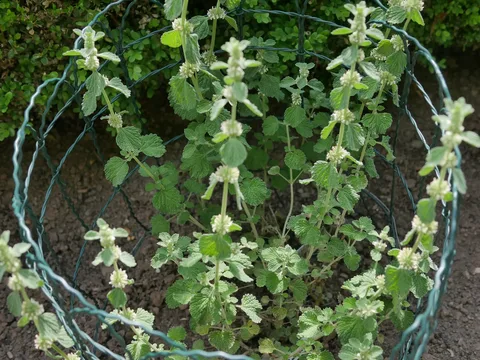
Gewöhnlicher Andorn
Marrubium vulgare
Plantae · Tracheophyta · Lamiaceae · Marrubium · Lamiales · Magnoliopsida
Auch: Marrubium album, Marrubium apulum, Marrubium ballotoides, Marrubium germanicum, Marrubium hamatum, Marrubium hyperleucum, Marrubium hyperleucum brevidens, Marrubium hyperleucum comosum, Marrubium kusnetzowii, Marrubium lanatum, Marrubium propinquum, Marrubium uncinatum, Marrubium vaillantii, Prasium marrubium, Salvia fulgens unranked
Wirkung
- Harntreibend
- Schleimlösend
- Entzündungshemmend
- Antibakteriell
Anwendung
- Tee
- Sirup
- Extrakt
- Tinktur
Überlieferte Heilwirkungen
- Verdauungsbeschwerden
- Atemwegsinfekten
- Husten
- Bronchitis
- Blasenentzündungen
- Halsschmerzen
Signaturenlehre
- Form
- Herzchen
- Geschmack
- Bitter
- Standort
- Trocken, sonnig
- Blütezeit
- Sommer
Verwendete Pflanzenteile
- Blätter
Zubereitung
- Tee: 1–2 TL getrocknete Blätter mit heißem Wasser übergießen, 10 Minuten ziehen lassen, 2–3 Tassen täglich trinken. · Sirup: 1–2 TL Sirup in Wasser aufgelöst.
Erntezeit
- Teil: Blatt · Monate: [6, 7] · Hinweis: Im Frühling oder Sommer ernten, wenn der Gehalt an ätherischen Ölen und Wirkstoffen hoch ist. · Mondphase: zunehmend
Sammeln
- Monate: [4, 5] · Bedingungen: Im Blütezeitpunkt oder kurz davor sammeln. · Pflanzenteil: Blätter · Reifezustand: vor Reife|Knospe|reif
- Monate: [10, 11] · Bedingungen: Im Herbst nach dem Laubfall sammeln. · Pflanzenteil: Wurzel · Reifezustand: nach Frost|Herbst
- Monate: [4, 5] · Bedingungen: Im Blütezeitpunkt oder kurz davor sammeln. · Pflanzenteil: Gesamtpflanze · Reifezustand: reif|überreif
Inhaltsstoffe
- 3,4-dihydroxycinnamic acid
- ladanein
- marrubin
- 9-[2-(furan-3-yl)ethyl]-9-hydroxy-4,8,10-trimethyl-2-oxatricyclo[6.3.1.0⁴,¹²]dodecan-3-one
- verbascoside
- chamomile
- isomerized safflower acid
- (2e,4e,6e)-octadeca-2,4,6-trienoic acid
- octadeca-2,4-dienoic acid
- para-coumaric acid
- octadeca-2,4,6-trienoic acid
- stigmast-5-en-3-ol
- chrysoeriol
- 2-(3,4-dihydroxyphenyl)-5-hydroxy-7-{[3,4,5-trihydroxy-6-(hydroxymethyl)oxan-2-yl]oxy}chromen-4-one
- chlorogenic acid
- luteolin 7-o-glucoside
- vicenin-2
- (2r)-2-[(2e)-3-(3,4-dihydroxyphenyl)prop-2-enoyl]-2-hydroxybutanedioic acid
- apigenin 7-lactate
- luteolin 7-o-glucuronide
- apigetrin
- 5-hydroxy-2-(4-hydroxyphenyl)-4-oxochromen-7-yl (2r)-2-hydroxypropanoate
- 1-(5-hydroxy-3-methylpent-3-en-1-yl)-2,5,5,8a-tetramethyl-hexahydro-2h-naphthalen-1-ol
- echinacin
- vitexin
- luteolin 7-lactate
- 2-(3,4-dihydroxyphenyl)-5-hydroxy-4-oxochromen-7-yl (2r)-2-hydroxypropanoate
- (1r,2s,3r,4r,5r)-3,4-dihydroxy-2-isopropyl-5-methylcyclohexane-1-carboxylic acid
Ätherische Öle
- marrubin
- 9-[2-(furan-3-yl)ethyl]-9-hydroxy-4,8,10-trimethyl-2-oxatricyclo[6.3.1.0⁴,¹²]dodecan-3-one
- (1r,4as,8as)-1-[(3e)-5-hydroxy-3-methylpent-3-en-1-yl]-2,5,5,8a-tetramethyl-hexahydro-2h-naphthalen-1-ol
- (1r,2s,4r,4as,5s,8as)-1-[2-(furan-3-yl)ethyl]-5-(hydroxymethyl)-2,5,8a-trimethyl-hexahydro-2h-naphthalene-1,4-diol
- 1'',6'',8''-trimethyl-2h-dispiro[furan-3,2'-oxolane-5',7''-[3]oxatricyclo[6.3.1.0⁴,¹²]dodecan]-2''-one
- 1-(5-hydroxy-3-methylpent-3-en-1-yl)-2,5,5,8a-tetramethyl-hexahydro-2h-naphthalen-1-ol
- (1r,4s,8s,9r,10s,12r)-9-[2-(furan-3-yl)ethyl]-9-hydroxy-4,8,10-trimethyl-2-oxatricyclo[6.3.1.0⁴,¹²]dodecan-3-one
- (1s,2r,4as,8as)-1-[(3e)-5-hydroxy-3-methylpent-3-en-1-yl]-2,5,5,8a-tetramethyl-hexahydro-2h-naphthalen-1-ol
- (1r,2r,4r,4as,5s,8as)-1-[2-(furan-3-yl)ethyl]-5-(hydroxymethyl)-2,5,8a-trimethyl-hexahydro-2h-naphthalene-1,4-diol
- (1''s,3s,4''r,5'r,6''r,8''s,12''r)-1'',6'',8''-trimethyl-2h-dispiro[furan-3,2'-oxolane-5',7''-[3]oxatricyclo[6.3.1.0⁴,¹²]dodecan]-2''-one
- (1r,2s,3r,4r,5r)-3,4-dihydroxy-2-isopropyl-5-methylcyclohexane-1-carboxylic acid
- premarrubiin
- 3,4-dihydroxy-2-isopropyl-5-methylcyclohexane-1-carboxylic acid
- 1-[2-(furan-3-yl)ethyl]-5-(hydroxymethyl)-2,5,8a-trimethyl-hexahydro-2h-naphthalene-1,4-diol
Sicherheit und Wechselwirkungen
Giftigkeit
schwach
Herkunft der Einstufung: Marrubiin (die Zeile nennt es): Bitterstoff, in hoher Dosis herzrhythmuswirksam; als Hustendroge gebräuchlich.
Nebenwirkungen
- Magen-Darm-Reizungen
- Hustenreiz verstärken oder Allergien auslösen
Gegenanzeigen
- Schwangerschaft
- Niereninsuffizienz
- Überempfindlichkeit gegen Labiatae
- Säureüberschuss im Magen
Wechselwirkungen
- Blutdrucksenkende Medikamente
- Diuretika
- Abführmittel
Dieser Eintrag wird noch ergänzt.
Als PDF mitnehmen